I have a Morso and can make my own frames. I'm currently casting ornate gold frames with Herculite plaster in a mould, which look cute, if I say so myself.
Now artists are always asking me to do demos, and or teach them how to frame their work. I tend not to do this as the biggest stumbling block for them will be cutting the wood, and cutting the wood accurately.
Some get a "manual" saw and a mitre block (or their husbands do), but after one or 2 frames find it a pain to do.
The mitre service when you buy from suppliers isn't really that cheap either. Ready made frames are available. But if someone wants to make their own, how do they get beyond the accurate mitre difficulty.
I suppose there is no reason for the corners to be a mitre, they could be straight, perhaps?
Is there another way to get a decent mitre? I cannot think of one.
is a mitre corner necessary
-
Gillthepainter
- Posts: 159
- Joined: Thu 02 Aug, 2012 2:39 pm
- Location: Cirencester
- Organisation: Crescent Art Space
- Interests: Painting, frame making, sourdough baking

-
vintage frames
- Posts: 1642
- Joined: Tue 12 Jun, 2012 6:05 pm
- Location: West Wales
- Organisation: https://www.dermotmcardle.co.uk/
- Interests: Making picture frames
- Contact:
Re: is a mitre corner necessary
I'll answer this one.
The rest of them are probably away up to that trade fair in Wolverhampton.
Use a simple tenon saw and mitre block from Screwfix if you want some sort of a decent mitre on wood.
The secret however is to ONLY do it with a bare-wood moulding and to use a band-clamp to secure the frame tight, whilst the glue dries.
That's really all that's needed.
Professional picture-framers use a morso so as to get super accurate mitres on their frames. They have to because the customer is going to be sniffing all over it looking for reasons as to why they have to pay so much to get their art-work framed.
The Pre-raphaelites used square or butt joints on their oak frames but that actually requires a lot more skilled carpentry than a simple mitre.
The rest of them are probably away up to that trade fair in Wolverhampton.
Use a simple tenon saw and mitre block from Screwfix if you want some sort of a decent mitre on wood.
The secret however is to ONLY do it with a bare-wood moulding and to use a band-clamp to secure the frame tight, whilst the glue dries.
That's really all that's needed.
Professional picture-framers use a morso so as to get super accurate mitres on their frames. They have to because the customer is going to be sniffing all over it looking for reasons as to why they have to pay so much to get their art-work framed.
The Pre-raphaelites used square or butt joints on their oak frames but that actually requires a lot more skilled carpentry than a simple mitre.
-
prospero

- Posts: 11698
- Joined: Tue 05 Jun, 2007 4:16 pm
- Location: Lincolnshire
Re: is a mitre corner necessary
When I started off I had (still got it) a Nobex captive mitre saw. It did a reasonable job - to a point.
Narrow mouldings not bad. But one day an artist pal arrived with a load of big chunky stuff and would
chop it into 12 x 16s for him... No problem says I and dived in. It's then that I realised the manual saw's
drawbacks. I made 10 frames, so that 80 (count 'em) cuts in a 3" moulding. Very arm-achy. When I joined
them there were huge gaps. I did learn two valuable lessons though: Don't use kit that isn't 'man enough'
and I had a crash course in gap filling.
Remember.... Each frame has 8 mitre faces and a tiny inaccuracy on the faces will be multiplied x8 and
manifest itself on a last corner to be joined. The wider the moulding the bigger the gap due to divergence.
You need spiders-eyebrow accuracy to get four perfect corners.
Actually vintage frames makes a good point. On bare wood frames that are going to have a finish applied
after joining you can make good any gaps in the prep process. For artists hand-finished frames are a good plan
as they can tailor the finishes to their exact desires and if (when) they get dinged while hauling them round
exhibitions they can be repaired perfectly. They can create their own signature frames that never get discontinued.
Narrow mouldings not bad. But one day an artist pal arrived with a load of big chunky stuff and would
chop it into 12 x 16s for him... No problem says I and dived in. It's then that I realised the manual saw's
drawbacks. I made 10 frames, so that 80 (count 'em) cuts in a 3" moulding. Very arm-achy. When I joined
them there were huge gaps. I did learn two valuable lessons though: Don't use kit that isn't 'man enough'
and I had a crash course in gap filling.
Remember.... Each frame has 8 mitre faces and a tiny inaccuracy on the faces will be multiplied x8 and
manifest itself on a last corner to be joined. The wider the moulding the bigger the gap due to divergence.
You need spiders-eyebrow accuracy to get four perfect corners.
Actually vintage frames makes a good point. On bare wood frames that are going to have a finish applied
after joining you can make good any gaps in the prep process. For artists hand-finished frames are a good plan
as they can tailor the finishes to their exact desires and if (when) they get dinged while hauling them round
exhibitions they can be repaired perfectly.
They can create their own signature frames that never get discontinued. Watch Out. There's A Humphrey About
-
Gillthepainter
- Posts: 159
- Joined: Thu 02 Aug, 2012 2:39 pm
- Location: Cirencester
- Organisation: Crescent Art Space
- Interests: Painting, frame making, sourdough baking
Re: is a mitre corner necessary
Thank you for your positive approaches. I could offer them the mitre box option, to overcome that big hurdle that I have.
I just didn't want to do a demo, knowing that none of them could go home and do it themselves.
I'm going through a gold frame stage, for me, I really fancied making old fashioned gold block corners.
But am struggling with my testers, as they just look like I've glued a piece of wood at the mitre join = which is what I have done. I've bought some corner blocks but cannot get it to look effective.
I think I'll abandon the idea until next year, when I have more time to make it look pro.
As you say, find a style you like and can achieve (without my amateur hacks).
This is the type I really liked when I went round an exhibit in London for 13th C art. I was more impressed by the frames.
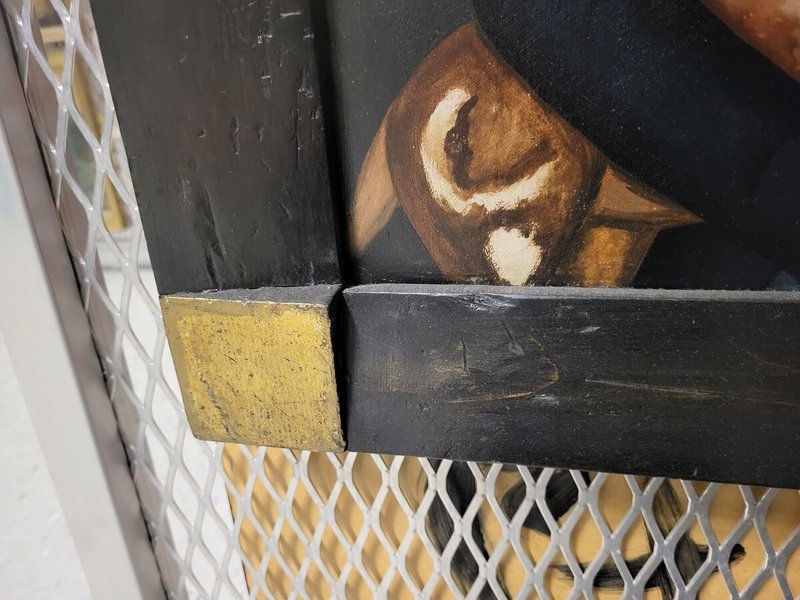
I just didn't want to do a demo, knowing that none of them could go home and do it themselves.
I'm going through a gold frame stage, for me, I really fancied making old fashioned gold block corners.
But am struggling with my testers, as they just look like I've glued a piece of wood at the mitre join = which is what I have done. I've bought some corner blocks but cannot get it to look effective.
I think I'll abandon the idea until next year, when I have more time to make it look pro.
As you say, find a style you like and can achieve (without my amateur hacks).
This is the type I really liked when I went round an exhibit in London for 13th C art. I was more impressed by the frames.
-
vintage frames
- Posts: 1642
- Joined: Tue 12 Jun, 2012 6:05 pm
- Location: West Wales
- Organisation: https://www.dermotmcardle.co.uk/
- Interests: Making picture frames
- Contact:
Re: is a mitre corner necessary
No! Don't be going and abandoning the idea.
Keep working on it and posting it all on here.
We could do with some lively creativity to read up on.
If you want to make that moulding, try this -
Make a frame with F9 (R&H), using the usual simple mitre joints. There won't be a rebate but that comes later.
Now using A221 as a reference, cut your corner blocks to the same height and width as A221.
Glue all four blocks to the corners of the F9 frame. Use small G-clamps, as the glue sets better under pressure.
A221 is now cut to fit between all of the blocks. Use a mitre box and a new sharp hand-saw to achieve clean 90 deg. cuts.
Glue these lengths down and you now have your frame.
The rebate will be clear all around but you might need to chisel out a bit on the corners.
Wipe a bit of gesso onto the blocks and gild whatever way best suits you.
Keep working on it and posting it all on here.
We could do with some lively creativity to read up on.
If you want to make that moulding, try this -
Make a frame with F9 (R&H), using the usual simple mitre joints. There won't be a rebate but that comes later.
Now using A221 as a reference, cut your corner blocks to the same height and width as A221.
Glue all four blocks to the corners of the F9 frame. Use small G-clamps, as the glue sets better under pressure.
A221 is now cut to fit between all of the blocks. Use a mitre box and a new sharp hand-saw to achieve clean 90 deg. cuts.
Glue these lengths down and you now have your frame.
The rebate will be clear all around but you might need to chisel out a bit on the corners.
Wipe a bit of gesso onto the blocks and gild whatever way best suits you.
-
JFeig
- Posts: 1483
- Joined: Thu 23 Sep, 2004 8:31 pm
- Location: Detroit, Michigan USA
- Organisation: minoxy, LLC
- Interests: non-fiction knowledge
Re: is a mitre corner necessary
Yes, "manual" saws can cut wood; however, with the advancement of modern "precision tools" there are better alternatives for making frames.
I started out in my teens with simple tools in a home craft shop and progressed to become a framemaker and gilder after taking classes and practice - practice - practice. The least expensive tools can be the most costly in the long run.
I do not know your specific training and situation. Are you a self taught hobbyist or a professionally trained artist? I do applaud you for trying new projects.
I grew up in an artistic environment where women, and men, had the ability to learn their craft, no matter their gender, and create beyond the "normal" gender roles of the time, the 50s and 60s. Painters, weavers, jewelers, glass blowers, potters, print makers, etc. They all acquired the tools and skills they needed to not be dependent on others with some exceptions. I have a friend who to this day does most of the maintenance chores in her home, landscaping, fixing dripping taps, minor electrical repairs, swinging a hammer, etc.
I started out in my teens with simple tools in a home craft shop and progressed to become a framemaker and gilder after taking classes and practice - practice - practice. The least expensive tools can be the most costly in the long run.
I do not know your specific training and situation. Are you a self taught hobbyist or a professionally trained artist? I do applaud you for trying new projects.
I grew up in an artistic environment where women, and men, had the ability to learn their craft, no matter their gender, and create beyond the "normal" gender roles of the time, the 50s and 60s. Painters, weavers, jewelers, glass blowers, potters, print makers, etc. They all acquired the tools and skills they needed to not be dependent on others with some exceptions. I have a friend who to this day does most of the maintenance chores in her home, landscaping, fixing dripping taps, minor electrical repairs, swinging a hammer, etc.
Jerome Feig CPF®
-
Gillthepainter
- Posts: 159
- Joined: Thu 02 Aug, 2012 2:39 pm
- Location: Cirencester
- Organisation: Crescent Art Space
- Interests: Painting, frame making, sourdough baking
Re: is a mitre corner necessary
Right u r.No! Don't be going and abandoning the idea.
And thank you for pointing me in the right direction for the sloping mouldings that would make those corner blocks work.
To answer your question, JFeig, I'm an amateur framer, and a professional painter, but with little ambition. I do exhibitions and I do art fairs.
I stretch my own canvases, paint the oil paintings, and make the frames if I can. My studio was next to a professional framer, who was keen to give me every bit of knowledge he could = much like the framers here, who are generous with their knowledge.
My 1960 Morso is a little older than I am, cost £200 and was covered in gunk. But it cleaned up a treat, and I had the 2 sets of blades sharpened at Lion.
I don't do others frames, I might if they have a piece of wood and they are desperate. I am happy to give guidance to them, usually it's their OHs who want to make frames, a way of getting involved in their partner's work.
I've been helped out a lot in my artie path & like to offer it back in some way.
Although as you will be aware, artists want the max they can get, for the same price as a frame from the Range. So I don't get involved.
These are the small cast frames I'm making from Herculite 2. For little impressionistic oil paintings. I had to be sure they were tough enough to sell, and wouldn't chip. They don't survive a long drop onto hard concrete (like a cup wouldn't), but are solid and durable otherwise.
Now they are fun to make and gild, and wax till they are suitably aged and golden.
PS at the end of the week, I'm doing a dry stone wall workshop, as our wall gave out recently. So I'll fix it myself for the price of a 2 day course @£195.
So yes, I am keen to have a go at many things if I can.
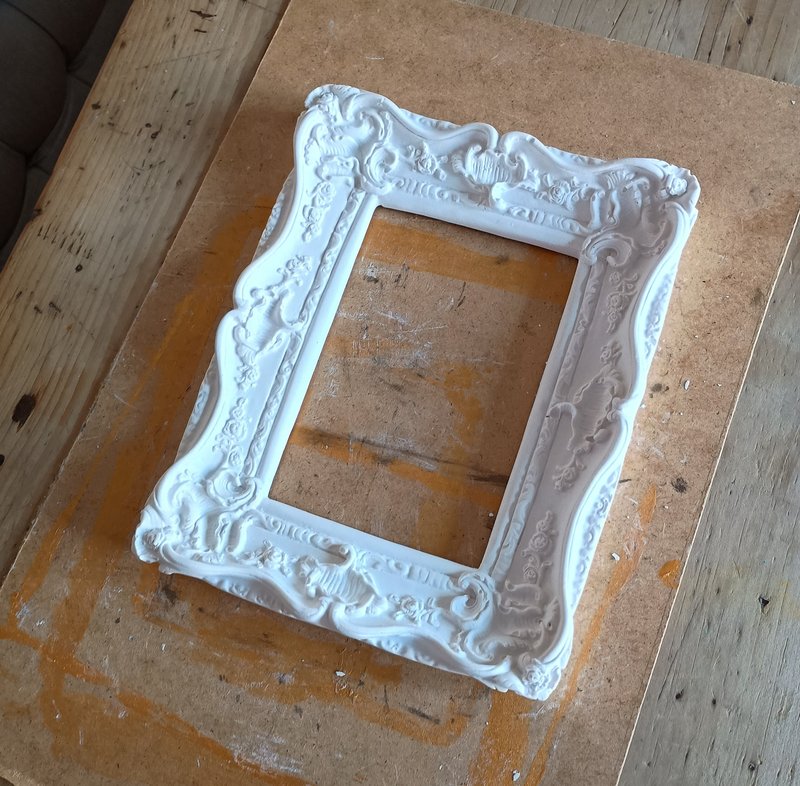
Anyway.
You've all answered my mitre corner question nicely.
-
vintage frames
- Posts: 1642
- Joined: Tue 12 Jun, 2012 6:05 pm
- Location: West Wales
- Organisation: https://www.dermotmcardle.co.uk/
- Interests: Making picture frames
- Contact:
Re: is a mitre corner necessary
That is a neat little frame.
Such a good idea to cast it in plaster.
Is it cast on to a wooden base frame or completely made of the Herculite?
You'll have to show us the finished article, ie gilding etc but no judging, just like to see how you do it.
Such a good idea to cast it in plaster.
Is it cast on to a wooden base frame or completely made of the Herculite?
You'll have to show us the finished article, ie gilding etc but no judging, just like to see how you do it.
-
JFeig
- Posts: 1483
- Joined: Thu 23 Sep, 2004 8:31 pm
- Location: Detroit, Michigan USA
- Organisation: minoxy, LLC
- Interests: non-fiction knowledge
Re: is a mitre corner necessary
I do not know the grade of "plaster" you are using as there are several grades(tensile strengths). IMHO, standard grade is way too soft for most applications in the making of picture frames. I always used a stronger grade, Hydrocal® or Hydrostone®. They are both considered gypsum cement vs plaster. Ask your source for local brands with similar properties. These are at least twice the compression strength of basic plaster.
You can also add additives to your mix like fibers(fiberglass, jute, or shredded wood etc) or resins such as PVA or basic wood glue to strengthen and flexibility you mix.
You can also add additives to your mix like fibers(fiberglass, jute, or shredded wood etc) or resins such as PVA or basic wood glue to strengthen and flexibility you mix.
Jerome Feig CPF®
-
Gillthepainter
- Posts: 159
- Joined: Thu 02 Aug, 2012 2:39 pm
- Location: Cirencester
- Organisation: Crescent Art Space
- Interests: Painting, frame making, sourdough baking
Re: is a mitre corner necessary
Good afternoon.
In some ways, the back is the hardest bit. As you cannot drill or put metal into the plaster, as it won't take the modest weight. These weigh 350g each.
The red X means it is a tester as I've tried to overcome difficulties, or things that haven't worked out = I tried gluing wood into the back but it pings out, so I cannot put wood in and attach hangers. Linen = unnecessary.

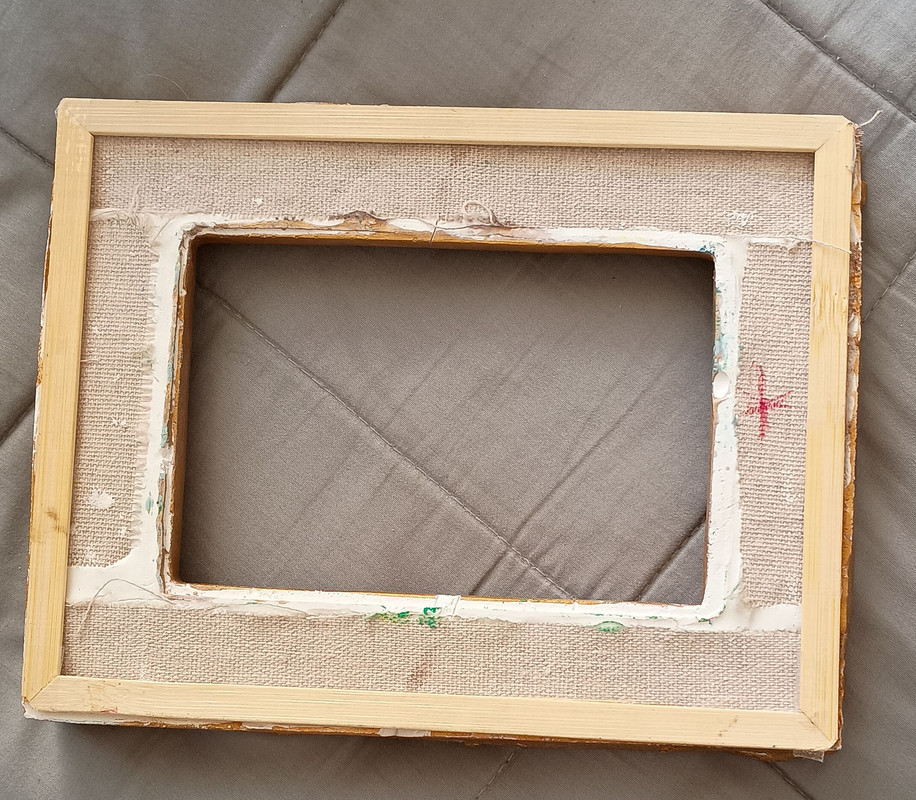
I decided to use the brown backing board to take the hangings. You can either stand them on a shelf, or hang them portrait or landscape with velcro dots to stop the stand sticking out if it's against the wall.
It's a bit homemade at the back, I have made it look tidier than this image using split pins in the holes on the metal string bit.
But this is the best I can come up with.
Please, if you have another suggestion, I'd love to hear it.
I also want to leave some of the white at the back visible, so potential buyers know it's stoneware.
Seascapes here as an example for you (I do landscapes and still lifes too) impressionistic works fine.
From the front: goldfinger is the last colour I put on after the wax
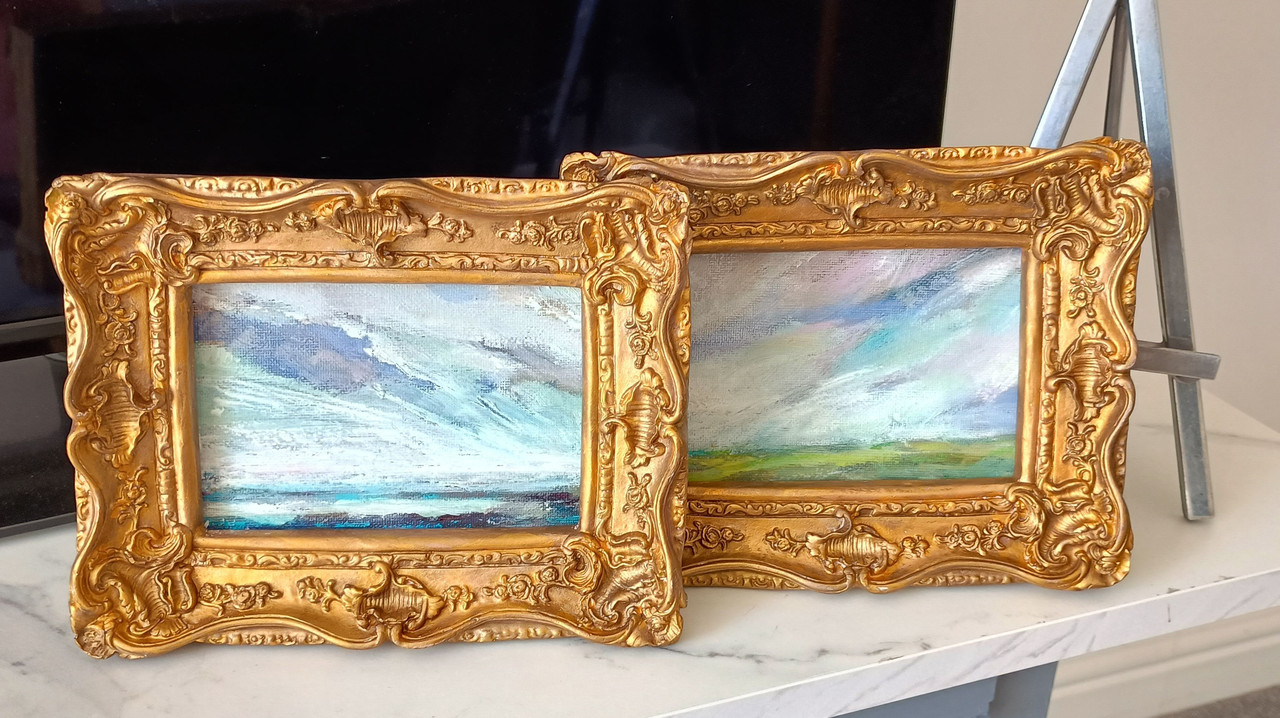
The success I've had is the brown framers tape almost glues to the plaster, and is reliable. It comes off too, but the adhesion is excellent.
And the casting is great.
Also, I made a drop box for the mould which is a tight fit, to stop any distortions I was getting early on. The casting is now arrow straight.
I can also use flat wood with a rebate and glue it to the back, but they aren't so cute and slim. Bit chunky.

In some ways, the back is the hardest bit. As you cannot drill or put metal into the plaster, as it won't take the modest weight. These weigh 350g each.
The red X means it is a tester as I've tried to overcome difficulties, or things that haven't worked out = I tried gluing wood into the back but it pings out, so I cannot put wood in and attach hangers. Linen = unnecessary.
I decided to use the brown backing board to take the hangings. You can either stand them on a shelf, or hang them portrait or landscape with velcro dots to stop the stand sticking out if it's against the wall.
It's a bit homemade at the back, I have made it look tidier than this image using split pins in the holes on the metal string bit.
But this is the best I can come up with.
Please, if you have another suggestion, I'd love to hear it.
I also want to leave some of the white at the back visible, so potential buyers know it's stoneware.
Seascapes here as an example for you (I do landscapes and still lifes too) impressionistic works fine.
From the front: goldfinger is the last colour I put on after the wax
The success I've had is the brown framers tape almost glues to the plaster, and is reliable. It comes off too, but the adhesion is excellent.
And the casting is great.
Also, I made a drop box for the mould which is a tight fit, to stop any distortions I was getting early on. The casting is now arrow straight.
I can also use flat wood with a rebate and glue it to the back, but they aren't so cute and slim. Bit chunky.
-
Gillthepainter
- Posts: 159
- Joined: Thu 02 Aug, 2012 2:39 pm
- Location: Cirencester
- Organisation: Crescent Art Space
- Interests: Painting, frame making, sourdough baking
Re: is a mitre corner necessary
Hydrocal & Hydrostone.
Got it, thank you.
The supplier of the moulding recommended Herculite 2 as a "toughened" plaster. And I did try wacking one on the patio, and it didn't chip or break.
It did when I dropped it from the bedroom window, but only in half. It didn't shatter, none of the outside chipped, so it does have substantial form.
My 5kilo bag will make 12 frames, and this is the product here: https://www.ebay.co.uk/itm/155377076404 ... 5580190019
So when it is finished I shall have a look at your 2 recommendations, and the strengthening side.
I'm sure I saw them in videos when I was first looking at this.
Got it, thank you.
The supplier of the moulding recommended Herculite 2 as a "toughened" plaster. And I did try wacking one on the patio, and it didn't chip or break.
It did when I dropped it from the bedroom window, but only in half. It didn't shatter, none of the outside chipped, so it does have substantial form.
My 5kilo bag will make 12 frames, and this is the product here: https://www.ebay.co.uk/itm/155377076404 ... 5580190019
So when it is finished I shall have a look at your 2 recommendations, and the strengthening side.
I'm sure I saw them in videos when I was first looking at this.
-
Gillthepainter
- Posts: 159
- Joined: Thu 02 Aug, 2012 2:39 pm
- Location: Cirencester
- Organisation: Crescent Art Space
- Interests: Painting, frame making, sourdough baking
Re: is a mitre corner necessary
I'm aware that my amateur attempts aren't quite to framers' standards.
But know that you are always happy to help. However, I'm thoroughly enjoying painting small arworks and framing them like this.
Even my very first test wasn't so bad, but did not achieve the oldie feel I wanted in any way. That was a failed attempt.
I used a flat wooden frame, easy enough.
And I tried gluing airdry clay onto it. It worked, I suppose. But wasn't crisp in detail. And didn't look "classy" enough.
So I bought a mould, that I'm very pleased with. £95, but it pays for itself if I sell 2 pictures. So far I've sold 1.
And have made 13 pictures to take to an art fair in 2 weeks in Bath.
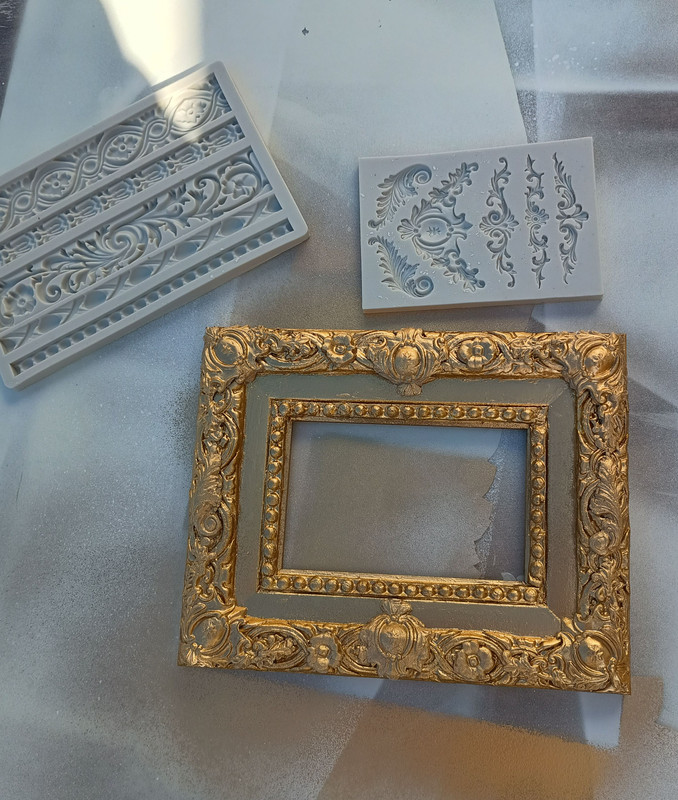
EBAY picture (I'm pleased I was able to fix that bowing the seller has in their image)

But know that you are always happy to help. However, I'm thoroughly enjoying painting small arworks and framing them like this.
Even my very first test wasn't so bad, but did not achieve the oldie feel I wanted in any way. That was a failed attempt.
I used a flat wooden frame, easy enough.
And I tried gluing airdry clay onto it. It worked, I suppose. But wasn't crisp in detail. And didn't look "classy" enough.
So I bought a mould, that I'm very pleased with. £95, but it pays for itself if I sell 2 pictures. So far I've sold 1.
And have made 13 pictures to take to an art fair in 2 weeks in Bath.
EBAY picture (I'm pleased I was able to fix that bowing the seller has in their image)
-
JFeig
- Posts: 1483
- Joined: Thu 23 Sep, 2004 8:31 pm
- Location: Detroit, Michigan USA
- Organisation: minoxy, LLC
- Interests: non-fiction knowledge
Re: is a mitre corner necessary
One way to secure strips of wood for attaching hardware is to insert screws or something else into the back of the wood strips before inserting them into the soft moulding material to give them some "grip" into the material.
Jerome Feig CPF®
-
Gillthepainter
- Posts: 159
- Joined: Thu 02 Aug, 2012 2:39 pm
- Location: Cirencester
- Organisation: Crescent Art Space
- Interests: Painting, frame making, sourdough baking
Re: is a mitre corner necessary
That seems a better approach to what I'm doing at the moment.
I have hundreds of brass screw eyes, which would be ideal fixings if I can get wood the to stay. I'll make another tester tomorrow morning to see.
Countersunk corner blocks might work. I have 200 or so of them doing nothing.
I've decided to lose the strut backs.
They are too chunky against the wall no matter how flush I can get them, which is a shame, as they suit the pictures on a shelf or table top.
I have hundreds of brass screw eyes, which would be ideal fixings if I can get wood the to stay. I'll make another tester tomorrow morning to see.
Countersunk corner blocks might work. I have 200 or so of them doing nothing.
I've decided to lose the strut backs.
They are too chunky against the wall no matter how flush I can get them, which is a shame, as they suit the pictures on a shelf or table top.
-
Gillthepainter
- Posts: 159
- Joined: Thu 02 Aug, 2012 2:39 pm
- Location: Cirencester
- Organisation: Crescent Art Space
- Interests: Painting, frame making, sourdough baking
Re: is a mitre corner necessary
I have something called a blind nailer. A nothing special gadget.or something else
That might work = tester tomorrow.
-
vintage frames
- Posts: 1642
- Joined: Tue 12 Jun, 2012 6:05 pm
- Location: West Wales
- Organisation: https://www.dermotmcardle.co.uk/
- Interests: Making picture frames
- Contact:
Re: is a mitre corner necessary
I like those little art-works.
Very decorative and that's not to demean them.
I can see you selling a lot of those.
The overall package is very saleable.
As regards the backs, try using a builder's adhesive like 'No More Nails' or 'Sticks Like Shit'. That way you can stick the plaster frame on to a wooden base like one of the R&H fillets.
Try A293, I think its called. It has a bevel which you could leave on the outside edge. This will give the frame a lot more support and also give you something to screw into for the hangers.
For a wide range of casting and moulding materials, have a look at Polycrafts/ Tiranti website.
Using a firmer moulding rubber will avoid distortions when casting.
The gilding is quite effective for what it is. Without spending much more money, you could achieve a brighter and more authentic appearance by using 'Flash Gilding'.
We discussed that in a recent earlier post.
The value then would be that you could tone down the gild without losing too much of its brilliance.
A quick summary would be to paint the raw plaster all over with Yellow Ochre acrylic paint, then pick out the high points with a light brush of Venetian Red.
Seal it all with a coat of clear shellac.
Apply a REALLY thin coat of 3 hour oil Gold Size, then dust on a gold coloured bronze powder when the size reaches tack.
WEAR A DUST MASK!
Gold Leaf Supplies is your go to for this. I would use a Pale gold powder for that style of frame.
Next day seal the frame with clear shellac to prevent tarnishing.
Now you can play with some earthy colours to tone down the brilliance and also the option of rubbing back the gild to show a little of the underlying red.
Very decorative and that's not to demean them.
I can see you selling a lot of those.
The overall package is very saleable.
As regards the backs, try using a builder's adhesive like 'No More Nails' or 'Sticks Like Shit'. That way you can stick the plaster frame on to a wooden base like one of the R&H fillets.
Try A293, I think its called. It has a bevel which you could leave on the outside edge. This will give the frame a lot more support and also give you something to screw into for the hangers.
For a wide range of casting and moulding materials, have a look at Polycrafts/ Tiranti website.
Using a firmer moulding rubber will avoid distortions when casting.
The gilding is quite effective for what it is. Without spending much more money, you could achieve a brighter and more authentic appearance by using 'Flash Gilding'.
We discussed that in a recent earlier post.
The value then would be that you could tone down the gild without losing too much of its brilliance.
A quick summary would be to paint the raw plaster all over with Yellow Ochre acrylic paint, then pick out the high points with a light brush of Venetian Red.
Seal it all with a coat of clear shellac.
Apply a REALLY thin coat of 3 hour oil Gold Size, then dust on a gold coloured bronze powder when the size reaches tack.
WEAR A DUST MASK!
Gold Leaf Supplies is your go to for this. I would use a Pale gold powder for that style of frame.
Next day seal the frame with clear shellac to prevent tarnishing.
Now you can play with some earthy colours to tone down the brilliance and also the option of rubbing back the gild to show a little of the underlying red.
-
Justintime
- Posts: 2544
- Joined: Sat 26 Sep, 2015 8:48 am
- Location: West Wales
- Organisation: George The Framer LLP
- Interests: Gardening, design, electronic music, good food and beverages.
- Contact:
Re: is a mitre corner necessary
And if for some reason the builder's adhesives don't work, then use CT1. Unfortunately it's £10/tube so you'll want to have quite a few ready in advance.
Justin George GCF(APF)
-
Mickeym
- Posts: 7
- Joined: Sat 01 Aug, 2020 4:11 pm
- Location: Amersham
- Organisation: Designer
- Interests: Printing
Designing
Sculpturing
Football
Re: is a mitre corner necessary
I'm an artist and not a framer but use this forum for ideas as I regularly use frames for a lot of my art and mixed media.
I've actually been working with gypsum for the last 8 years, making various sculptures and figurines. I used Crystacal R for the majority of this time but made the switch to Herculite 2 as it suits a lot of my smaller casts. It dries far quicker than Crystacal R and i find it far more workable. I was always under the impression Crystacal R was the strongest gypsum but Herculite 2 appears to be stronger.
I have tried making frames many times over the years using plaster and have found the same issues regarding finding suitable methods for the back of the frame and to be honest this became an issue and I gave up. The most suitable way, apart from using a 2 part mould which would capture both the front and back but is very difficult to do, is to create a standard 1 part mould of the whole front/back of frame. Once dry, get the back as flat and smooth as possible then apply the same type of backing board that ceramic bisque frames use. It is an all in one backing board that has a window area that opens to place a print into then closes with a tab. You would glue this directly to the back of the frame. Some high end retail outlets use similar backing boards on their frames and these tend to have a velvet material backing that opens/closes with a tab in exactly the same way and glued down onto the back.
These backing boards are quite hard to come by in the UK, but if you go onto some bisque websites they sell just the boards but your frame would need to be the same size as the board they sell. However, you can have these boards mass produced in China.
I've actually been working with gypsum for the last 8 years, making various sculptures and figurines. I used Crystacal R for the majority of this time but made the switch to Herculite 2 as it suits a lot of my smaller casts. It dries far quicker than Crystacal R and i find it far more workable. I was always under the impression Crystacal R was the strongest gypsum but Herculite 2 appears to be stronger.
I have tried making frames many times over the years using plaster and have found the same issues regarding finding suitable methods for the back of the frame and to be honest this became an issue and I gave up. The most suitable way, apart from using a 2 part mould which would capture both the front and back but is very difficult to do, is to create a standard 1 part mould of the whole front/back of frame. Once dry, get the back as flat and smooth as possible then apply the same type of backing board that ceramic bisque frames use. It is an all in one backing board that has a window area that opens to place a print into then closes with a tab. You would glue this directly to the back of the frame. Some high end retail outlets use similar backing boards on their frames and these tend to have a velvet material backing that opens/closes with a tab in exactly the same way and glued down onto the back.
These backing boards are quite hard to come by in the UK, but if you go onto some bisque websites they sell just the boards but your frame would need to be the same size as the board they sell. However, you can have these boards mass produced in China.
-
Gillthepainter
- Posts: 159
- Joined: Thu 02 Aug, 2012 2:39 pm
- Location: Cirencester
- Organisation: Crescent Art Space
- Interests: Painting, frame making, sourdough baking
Re: is a mitre corner necessary
I shall.For a wide range of casting and moulding materials, have a look at Polycrafts/ Tiranti website.
Using a firmer moulding rubber will avoid distortions when casting.
I've already thought that I might need to buy another mould or 2. To offer a different style and perhaps make this easier.
Although I'm nearly there I shall have to refine things.
Fortunately for me, artist fairs and exhibits can be more "home made". Clients aren't expecting factory finished purchases.
Who would have thought that the frame would be the more interesting thing, than painting 6 x 4 inch pictures.
PS
I like the Polycrafts site. A lot.
-
vintage frames
- Posts: 1642
- Joined: Tue 12 Jun, 2012 6:05 pm
- Location: West Wales
- Organisation: https://www.dermotmcardle.co.uk/
- Interests: Making picture frames
- Contact:
Re: is a mitre corner necessary
Whilst I agree that a lot of these craft and artists fairs can have a rather home-made feel about them, maybe you should see it as an opportunity to shine above all the rest.
People don't come to these fairs to seek out the lowest denominator.
They are looking for something that impresses them.
Then they'll easily part with their money.
The art work is good, well crafted.
Don't insult it with a shoddy frame.
People don't come to these fairs to seek out the lowest denominator.
They are looking for something that impresses them.
Then they'll easily part with their money.
The art work is good, well crafted.
Don't insult it with a shoddy frame.